Rock Climbing in Wadi Rum in Jordan
The Unexpected Vertical Desert

Most travelers imagine Wadi Rum as a horizontal landscape — an endless ocean of red sand crossed by 4×4 Jeeps and camel caravans.
But for those who look upward, the desert reveals its true identity.
Towering sandstone massifs rise dramatically from the sand, forming natural walls, pillars, and domes that resemble the vaulted ceilings of ancient cathedrals.
Hidden beyond the common tourist routes lies one of the world’s most unique climbing landscapes — a vertical desert playground that quietly rivals famous climbing destinations across the globe.
From sun-baked slabs to cool shaded cracks and narrow slot canyons, Wadi Rum offers routes for everyone, from curious beginners to experienced traditional climbers.
Climbing Climbing Climbing
A Three-Tiered Adventure Playground
Climbing in Wadi Rum naturally divides into three main disciplines, allowing visitors to choose their level of adventure and technical challenge.
Sport Climbing
Ideal for climbers seeking security and fixed protection.
Single-pitch and multi-pitch routes range from French 5A to 6B, making them accessible to both beginners and intermediate climbers who want to focus on movement rather than gear placement.
Traditional (Trad) Climbing
These are the legendary desert routes — long sandstone towers climbed using removable protection. Trad climbing here offers a raw, adventurous atmosphere often compared to alpine climbing, but set in the silence of the desert.
Scrambling
Not every summit requires ropes.
Fit hikers can reach iconic peaks such as Jebel Rum (1,734 m) through complex Bedouin scrambling routes. These paths weave through ledges, ramps, and natural staircases in the rock, requiring balance, awareness of height, and occasional use of hands.

The “Eye of Allah” and the Ultimate Desert Bivouac
For experienced climbers, one route represents the ultimate desert adventure.
The Eye of Allah route on the East Face of Jebel Rum is considered one of the most iconic traditional climbs in Jordan.
This multi-pitch route leads climbers through a massive eye-shaped cave carved naturally into the sandstone before continuing up cracks and exposed ridges toward the summit plateau.
Grade: French 5a (HVS 5a / YDS 5.8)Height: roughly 400 meters
Most climbers complete the route over two days, allowing time to spend a night on the mountain.
At the summit, the desert reveals a rare kind of silence.
A simple meal cooked on a small stove, a bivouac bag under an infinite sky, and the slow sunset over the red valleys of Wadi Rum create one of the most unforgettable mountain experiences in the Middle East.
At dawn, the first light breaks across the sandstone towers, illuminating the desert in deep shades of gold and crimson.

A Climbing Wall in the Wilderness
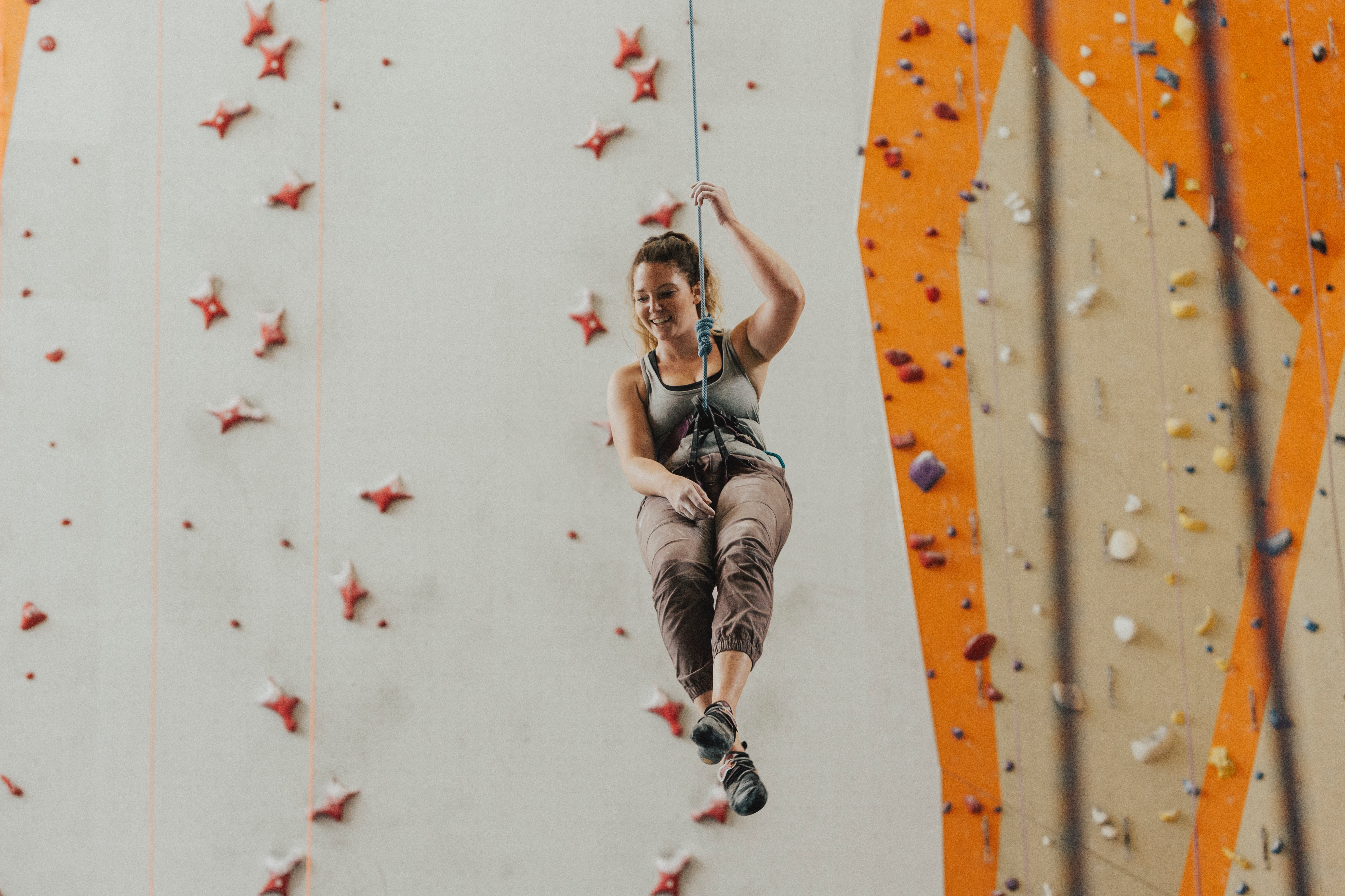
One surprising feature of the climbing infrastructure in Wadi Rum is the private climbing wall located at Wadi Rum Rock Climbing Camp.
Although it may seem unusual to build a climbing wall in the middle of a natural climbing paradise, it serves an important purpose.
The wall allows modern gym climbers to warm up, practice technique, and adapt to sandstone movement before tackling real desert routes. It provides a safe bridge between indoor climbing culture and the traditional rock environment of Wadi Rum.
Within the protected area, it remains the only facility of its kind.
Climbing Climbing
Technical Legends — From Crazy Camel to Orange Sunshine
Over the decades, Wadi Rum has developed routes that have become legendary within the international climbing community.
Crazy Camel
Located on Jebel M'zeygeh, this four-pitch sport route ranges from
French 6a+ to 6b+ (5.10a–5.10d YDS).
Climbers particularly enjoy the second pitch, where the crux is cleverly divided into two manageable sections, allowing steady progression for intermediate climbers.
Orange Sunshine
One of the classic traditional routes in the desert, this 300-meter climb follows the East Face of Jebel Burdah.
Graded French 5 (HVS 5a / YDS 5.9)
The route begins near a distinctive left-leaning rock staircase and eventually leads to an unforgettable traverse across a massive natural arch carved into the sandstone.

The adventure in Wadi Rum does not end when the rope is coiled.
Sleeping Like a Falcon — or Like a Martian
Accommodation options here are as memorable as the climbs themselves.
The Falcon Nest
A cave style sleeping experience high on the cliffs, echoing the traditional Bedouin use of natural rock shelters.
The Martian Bubble
Luxury dome tents with private bathrooms and panoramic desert views, inspired by the otherworldly landscape of Wadi Rum.
Traditional Bedouin Camps
Authentic tents where evenings end around a fire with sweet Bedouin tea, traditional Zarb dinner, music, and stories beneath the desert sky.
Moving Through History on the Jebel Khazali Scramble
The scramble on Jebel Khazali combines climbing with archaeology.
The route begins in a narrow slot canyon only a few meters wide.
The sandstone walls display water carved textures and ancient inscriptions believed to date back to the Nabataean period.
As the climb progresses through chimneys and natural ramps, travelers follow paths that Bedouin tribes have used for generations.
Each step upward feels like a journey not only through space, but through centuries of desert history.
Climbing Climbing
The Call of the Sandstone
Wadi Rum remains one of the most extraordinary climbing destinations on Earth because it blends world-class vertical adventure with legendary Bedouin hospitality.
Whether you are chimneying up remote sandstone towers or standing on the 1,734-meter summit of Jebel Rum, the experience is defined by a profound sense of openness and silence.
In a world increasingly dominated by the fluorescent lights and plastic holds of indoor climbing gyms, the untouched sandstone walls of Wadi Rum may represent something rare.
A place where climbing still feels like exploration.

Comments